About Woven Roving
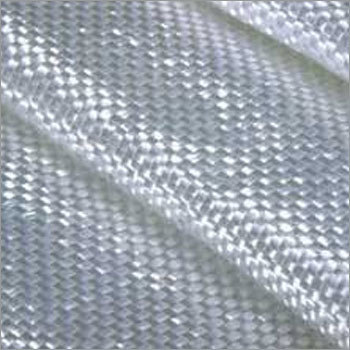
We have carved a formidable position for ourselves in the domain by manufacturing and supplying a durable range of Woven Roving. Highly compatible with many resins like polyester, vinyl ester and epoxy resin, these rovings are made by interweaving direct roving in plain weave pattern. Our Woven Roving is a bidirectional fabric broadly used for strengthening boats, vessels, planes, automotive parts, furniture and sports facilities. High mechanical strength, good covering & degassing properties and fast wet-out are some of the attributes of our rovings.
Superior Mechanical PropertiesWith high tensile strength and good elasticity, woven roving delivers reliable performance under mechanical stress. Its continuous filament structure and low crimp ensure dimensional stability and excellent recovery, making it suitable for demanding applications like marine construction and FRP molding.
Versatile CompatibilityFormulated with a silane binder, this woven roving is highly compatible with polyester, vinyl ester, and epoxy resins. This versatility allows seamless integration into various composite processes, ensuring strong bonding and optimal reinforcement outcomes.
Ideal for Industrial ApplicationsWhether for boat building, infrastructure reinforcement, or advanced composite molding, woven roving stands out with its corrosion resistance, low moisture absorption, and flexibility in roll sizes and weaving patterns. Its adaptability supports both high-volume manufacturing and specialized projects.
FAQs of Woven Roving:
Q: How is woven roving typically used in boat building and construction?
A: Woven roving is laid into molds or onto structures and then impregnated with resins (polyester, vinyl ester, or epoxy) to create durable, high-strength composite layers, essential for hulls, decks, and reinforcement panels.
Q: What determines the choice between plain and twill weave patterns for woven roving?
A: Plain weave provides maximum dimensional stability and minimal crimp, suitable for flat surfaces, while twill weave offers improved drapability for complex curves or detailed molds in FRP and marine applications.
Q: When is it appropriate to select different roll lengths for woven roving?
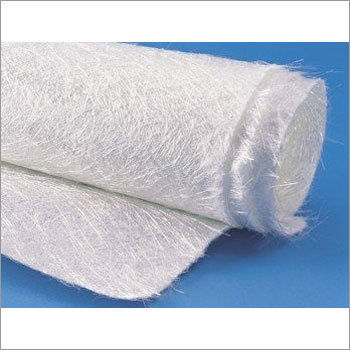
A: Roll length (50m, 100m, or custom) is based on project scalelonger rolls suit industrial and large-scale manufacturing, whereas shorter rolls are preferred for custom jobs or prototyping.
Q: Where is woven roving manufactured and supplied from?
A: This product is manufactured, exported, and supplied from India by experienced industry providers specializing in E-Glass Fiber composites.
Q: What benefits does silane binder offer in woven roving?
A: Silane binder enhances adhesion with compatible resins, improving fiber/resin interaction for increased mechanical strength and optimal wet-out, critical for structural integrity in composite products.
Q: How does the fibers continuous filament and low crimp frequency improve performance?
A: Continuous filament contributes to high strength and elasticity, while low crimp frequency ensures a flat weave for uniformity, reduced thickness variation, and better load distribution, resulting in reliable composite structures.
 Send Inquiry



 Get Latest Price

 Send Inquiry