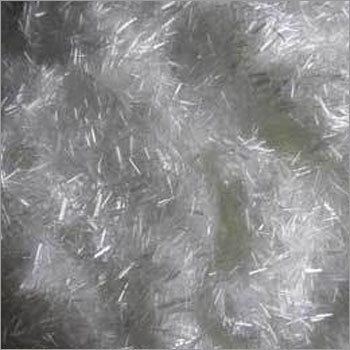
About Chopped Strands
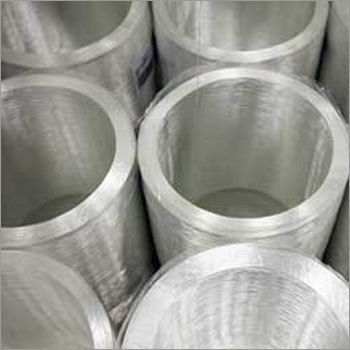
Our dedication has made us capable to attain prime position by providing excellent quality Chopped Strands that are engineered for their use in wet-process and non-woven applications. Excellent strength and dimensional stability is achieved in work using our strands. Some of the advantages of our strands are high strength, impact resistance, temperature and fatigue resistance, excellent stiffness, weighs less in comparison to others offered items in market and radar transparency. High quality manufacturing of these Chopped Strands ensures their unbeatable quality and effectiveness in desired applications.
Engineered for High PerformanceOur chopped strands are crafted with high tensile strength and low moisture content to ensure exceptional mechanical properties in end-use applications. The use of a silane coupling agent strengthens the bond between the fiber and matrix, resulting in enhanced resin compatibility and product longevity. They are designed to withstand demanding environments while providing reliable performance.
Versatile Applications Across IndustriesSuitable for use in thermoplastics, automotive parts, construction materials, and injection-molded components, these glass fibers deliver flexibility and efficiency. Their free-flowing, white appearance ensures easy processing and uniform dispersion, making them a preferred choice for manufacturers seeking superior reinforcement in critical applications.
FAQs of Chopped Strands:
Q: How are chopped strands with silane coupling agent used in reinforcement applications?
A: Chopped strands with a silane coupling agent are typically mixed with thermoplastic or thermoset resins such as unsaturated polyester, epoxy, or vinyl ester. The silane binder improves the bond between the glass fiber and resin, providing enhanced mechanical strength and durability in the final product. The fibers are ideal for injection molding and other composite manufacturing processes.
Q: What are the benefits of using glass fiber chopped strands in automotive and construction projects?
A: Using these glass fiber chopped strands enhances the strength, corrosion resistance, and dimensional stability of automotive and construction components. Their high tensile strength and good dispersion lead to lighter, more reliable parts that maintain performance under stress and resist harsh environmental conditions.
Q: When should I select chopped strands with a length range of 3 mm to 50 mm?
A: Choose the fiber length based on your applications reinforcement needs and processing method. Shorter strands are often favored for injection molding to ensure easy flow and uniform distribution, while longer fibers may be selected for applications requiring greater tensile reinforcement and impact resistance.
Q: Where are chopped glass fiber strands manufactured and supplied from?
A: These chopped glass fiber strands are manufactured and exported by leading suppliers in India. They are available globally in secure packaging, including 25 kg bags and jumbo bags, to meet the varying demands of industrial users.
Q: What process is followed to ensure loss on ignition and fineness requirements are met?
A: Strict quality assurance processes are implemented, involving kiln testing to verify a loss on ignition of 1.10% and routine particle size analysis to achieve a fineness of 99%. These controls guarantee the fibers maintain high purity and optimal reinforcing properties.
Q: How does the high modulus of elasticity benefit end-use products?
A: A high modulus of elasticity enables the fiber-reinforced composite to bear greater loads without deforming. This makes products made with these chopped strands particularly suitable for structural applications where rigidity and resistance to bending are critical.

 Send Inquiry



 Get Latest Price

 Send Inquiry