About Direct Roving
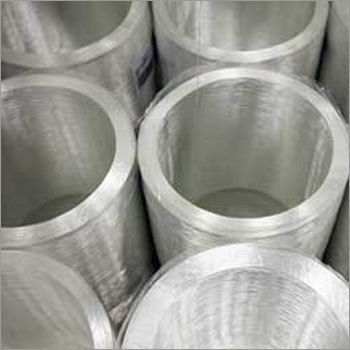
We are counted as the noteworthy organization, betrothed in supplying a high quality Direct Roving, which is suitable for several textile technologies. Special properties in our product are good warping and weaving and splice free single end roving. Experienced professionals of our organization make certain to deliver this product in approved quality packaging material to ensure the safety of product till it reaches customers end. Not only this, we always deliver Direct Roving within promised time frame at negotiable prices.
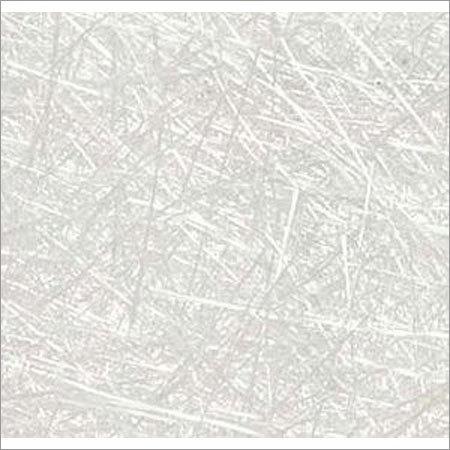
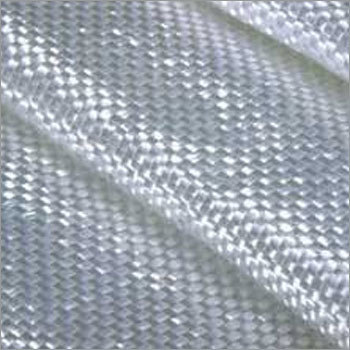
Superior Performance and VersatilityDirect Roving delivers high tensile strength and corrosion resistance, making it indispensable in various industrial applications, including pipe, tank, and profile manufacturing. Its compatibility with unsaturated polyester, epoxy, and vinyl ester resins ensures versatile use across multiple processes such as pultrusion, winding, weaving, and reinforcing composites. With continuous glass fiber construction, users benefit from excellent fiber distribution and consistent product quality.
Optimized for Efficiency and QualityManufactured to maintain a moisture content under 0.10% and fineness below 2.4%, our direct roving guarantees efficient resin impregnation and consistent mechanical performance. Its silane-based binder enhances bonding within composite matrices, while the industrial-grade specification ensures durability in demanding applications. Carefully packed to prevent damage, each consignment meets rigorous export standards for global distribution.
FAQs of Direct Roving:
Q: How can Direct Roving be used in composite manufacturing processes?
A: Direct Roving is suitable for a range of composite processes such as pultrusion, filament winding, weaving, chopped strand, and fabric production. Its continuous glass fiber structure offers excellent fiber distribution, allowing for uniform reinforcement in finished products like pipes, tanks, and profiles.
Q: What benefits does the silane-based binder provide in this roving?
A: The silane-based binder enhances the bonding of glass fibers with various resins, resulting in superior mechanical properties, improved corrosion resistance, and consistent adhesion throughout the composite structure. This leads to longer-lasting, high-performance FRP products.
Q: When should I select this direct roving for my project?
A: You should choose this direct roving when you require high tensile strength (150 N), excellent corrosion resistance, and compatibility with UP, EP, or VE resin systems. It is particularly beneficial in applications demanding robust performance, such as in SMC/BMC, pipes, tanks, and FRP components.
Q: Where is this Direct Roving manufactured and supplied from?
A: This direct roving is manufactured and exported from India by experienced industry suppliers, ensuring quality adherence for both local and international markets. The product is securely packed in cardboard boxes or pallets for safe transit.
Q: What is the typical process for using Direct Roving in pultrusion or winding?
A: In pultrusion or winding, continuous strands of direct roving are fed through resin baths (UP, EP, or VE), impregnated, and then shaped or wound to form profiles, pipes, or tanks. The high elasticity and excellent fiber distribution contribute to efficient production and end-product integrity.
Q: How does the high fineness and low moisture content benefit end applications?
A: A fineness of up to 2.4% and moisture content below 0.10% ensure better resin penetration and uniform fiber dispersion, resulting in composites with enhanced strength, durability, and reduced risk of voids or imperfections.
Q: What application fields are ideal for this glass fiber direct roving?
A: This direct roving is ideal for composite reinforcement in pipes, tanks, SMC/BMC, profiles, and general FRP productsespecially where corrosion resistance, mechanical strength, and consistent quality are required.
 Send Inquiry



 Get Latest Price

 Send Inquiry